La Maison · The House
Cosyrac
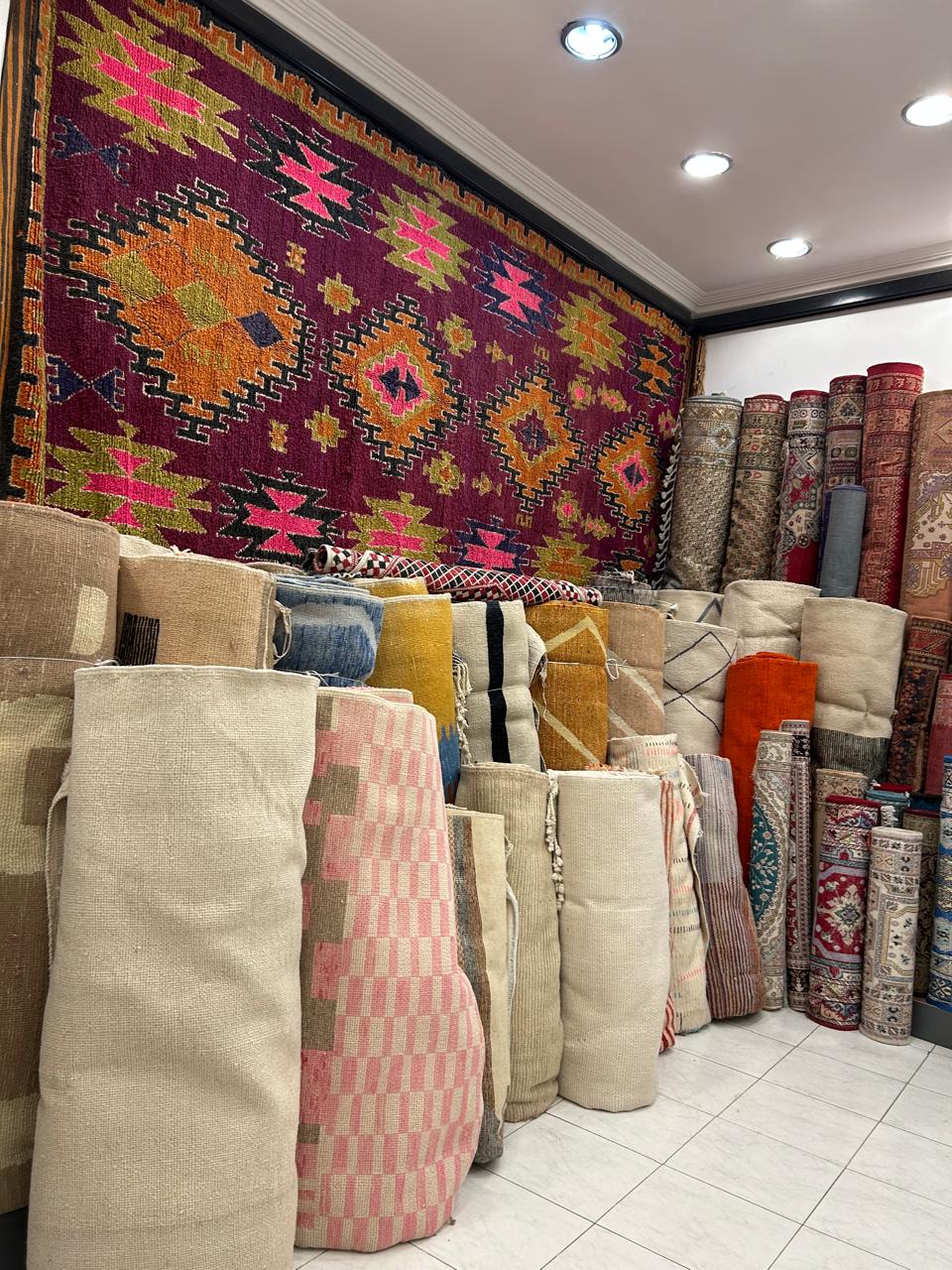
A house near Bab Laksour
Cosyrac works with Palais Saadien, a former palace in the heart of the ancient Medina of Marrakech, a few steps from Bab El Ksour — one of the oldest gates of the imperial city. The building dates to the Saadian period; its courtyard, with its cedar columns and carved stucco, has served many purposes over the centuries. Today it is a house of carpets.
Cosyrac has worked with Palais Saadien for decades, drawing on a collection that spans every major Moroccan weaving tradition — from the undyed ivory Beni Ourain of the northeastern Atlas to the saturated cardinal reds of Boujad, from the Azilal plateau's diary-like improvisation to the elemental rush mats of the Tuareg south. The guiding principle is simple: every piece must be hand-woven, and worthy of the name artwork.
“The carpet is a woman's storytelling canvas. Every knot is a word; every row, a sentence. When you learn to read this language, you hear a voice that has been speaking for centuries.”
01
Live-sheep wool
Every rug in the collection is woven from the wool of living sheep — shorn, not gathered. This matters for the quality of the lanolin, the luster of the pile, and the responsiveness to natural dye. The wool arrives in Marrakech from Atlas cooperatives whose animals graze on wild herbs and mountain grasses.
02
Vegetable dyes
Our palette is drawn almost entirely from madder root, indigo, saffron, pomegranate rind, walnut hull, and henna — mordanted and fixed using traditional Atlas methods. A few older pieces carry early synthetic colours from their own period, which we always note in their description. These natural colours deepen rather than fade; a rug from 1955 is not faded. It has become itself.
03
16 months, one weaver
A single medium-sized rug contains between 40,000 and 150,000 individual knots. At the pace of traditional weaving — six hours a day, with seasons for dyeing and harvest — this means a minimum of six months for a small piece, and up to sixteen months for a room-sized composition. Time is in every knot.
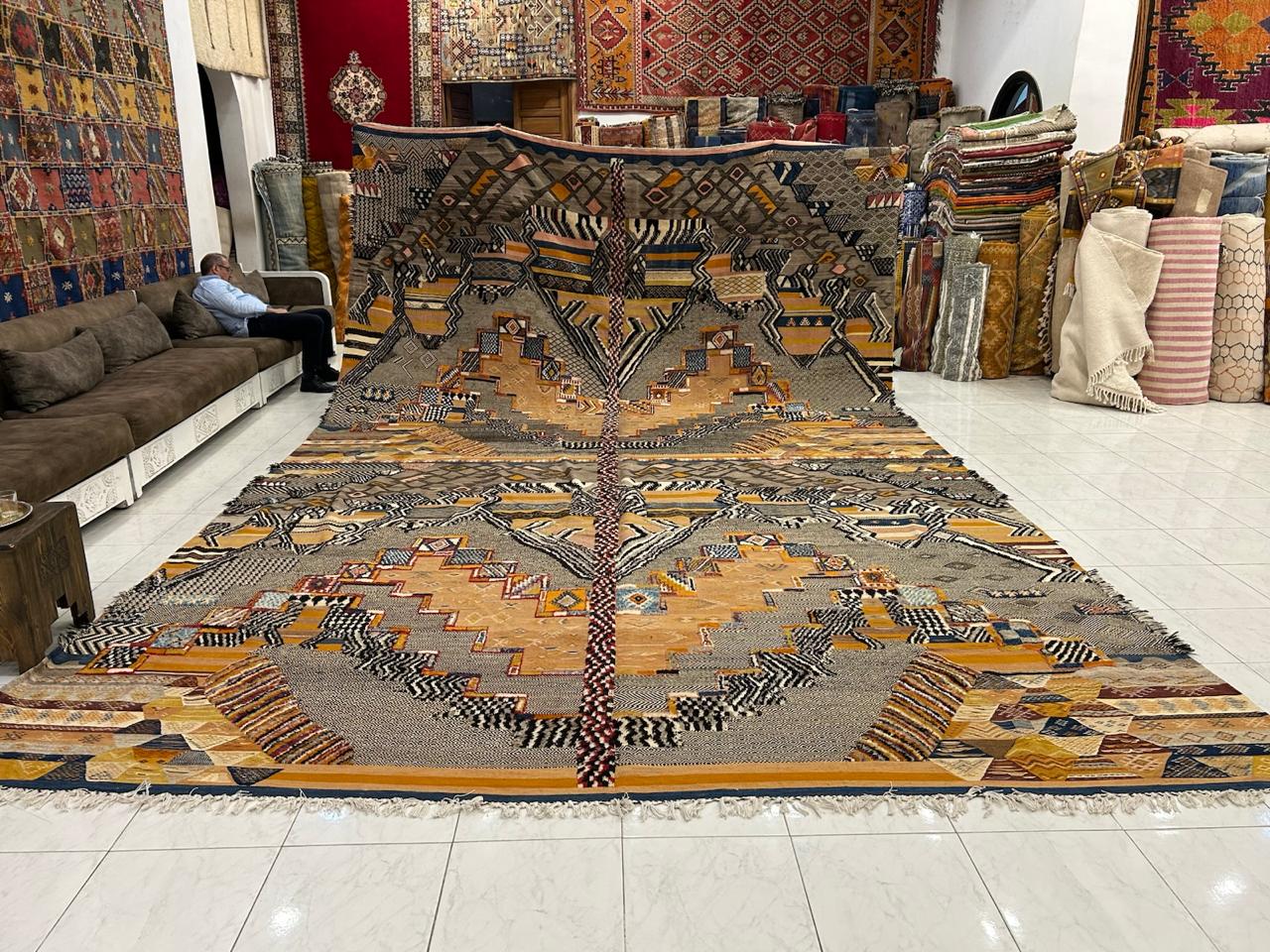
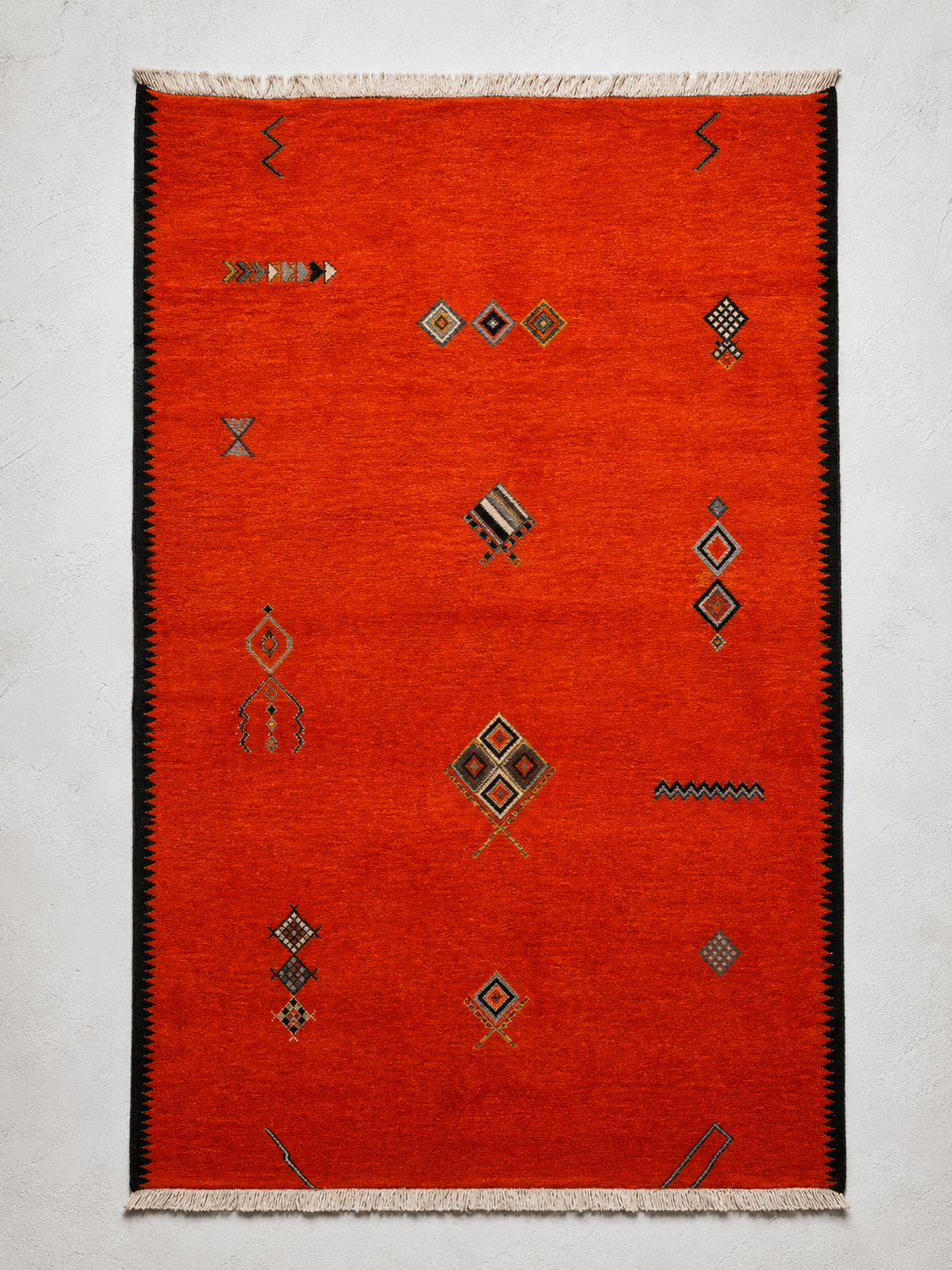
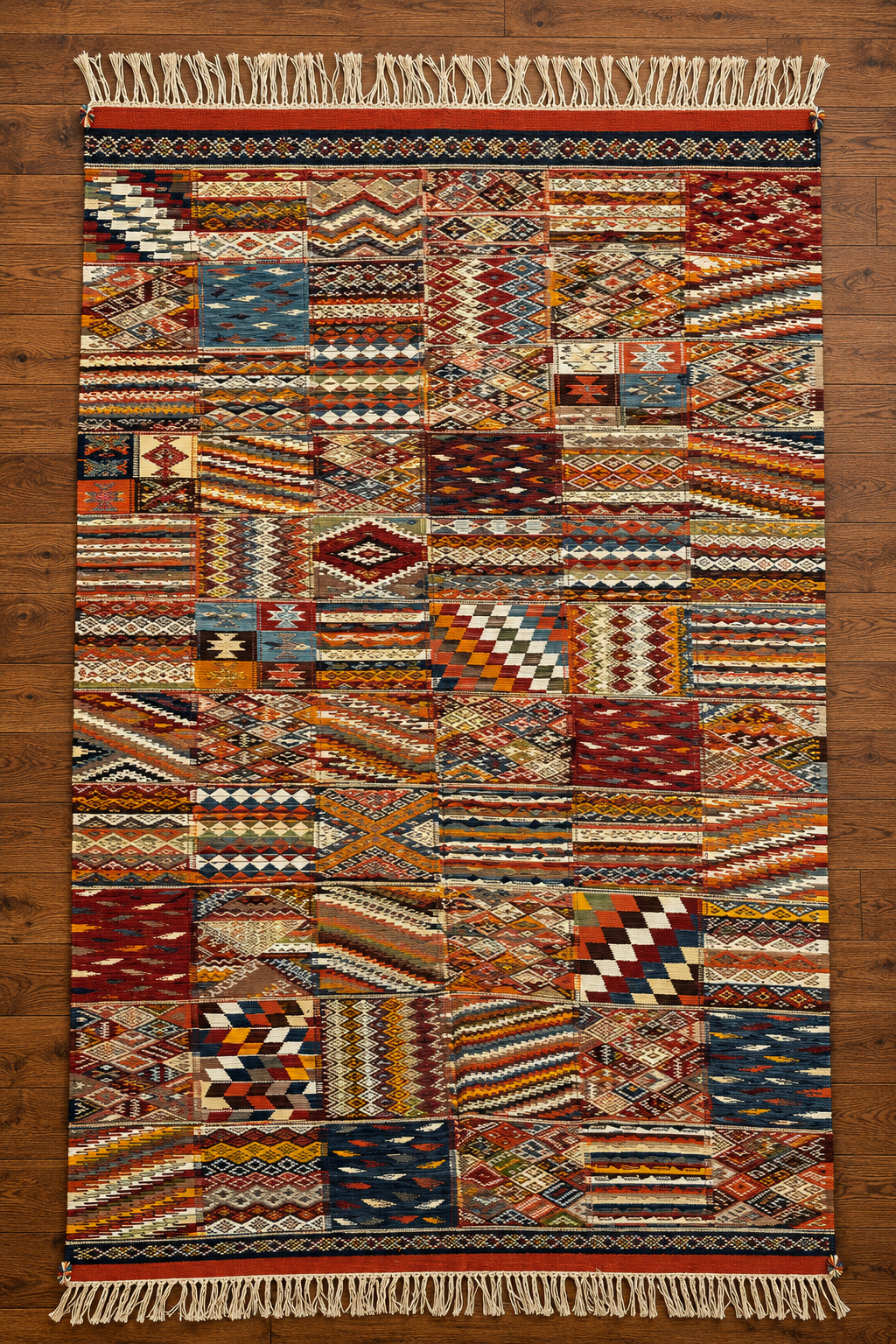
Visit the house. See the rugs in the light they were made for.
By appointment, always.